



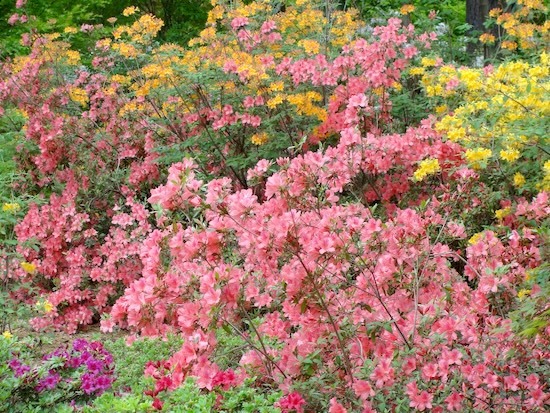
Colorful azaleas are part of our East Texas identity.
April 24, 2026 - Azaleas have just finished peak bloom, so it’s time to think about caring for them as they shift into their summer growth cycle. Tyler’s spring displays depend on the attention we give these plants once the flowers fade, and just after blooming remains an ideal window to handle fertilizing, pruning, and mulching. Choose a fertilizer formulated for acid-loving plants such as azaleas, camellias, and gardenias. For large beds, ammonium sulfate (21-0-0-) is a practical and affordable option.
Light fertilizing as new growth begins and no later than mid-July continues to be the safest approach. Spread fertilizer evenly across the bed and water it in thoroughly so nutrients move into the root zone where they belong. Never leave granules on the foliage since that can burn tender leaves. Timing your application before a rain is always helpful and makes the job easier.
Pruning naturally pairs with fertilizing this time of year. A light shearing after bloom, as the new flush appears, helps keep plants dense and encourages heavy bud set for next spring. The key is to finish pruning before late summer, since that is when next year’s flower buds begin forming. Pruning in fall or winter removes the very buds you’ve worked to encourage and leads to no blooms the following spring.
Early summer is also the ideal time to refresh mulch. Pine straw remains the gold standard, but pine bark, either shredded or composted, works well too. A light dressing of sphagnum peat moss around the root zone is also beneficial. Mulch helps conserve moisture, moderate soil temperatures, and suppress weeds during the long, hot months ahead. Just avoid piling it against the stems, which can lead to crown or stem rot.
Through our hot, dry East Texas summer (June, July, and August), azaleas still need about an inch of water every two weeks unless rainfall provides it. Deep, occasional watering is better than frequent light sprinkling. If leaves turn yellow with green veins, iron chlorosis may be the cause. Iron sulfate or chelated iron products can correct it. Iron and other micronutrients are almost always included in fertilizers formulated for azaleas. Iron deficiency, however, isn’t common in our acidic East Texas soils. Keep in mind that leaf yellowing in early spring is normal as older foliage is shed, so not every yellow leaf signals a problem.
Lace bugs remain the most common insect pest on azaleas. Their feeding causes a bleached or speckled look on the upper leaf surface, with tiny dark spots underneath. They are more common on plants growing in full sun. A granular systemic insecticide containing imidacloprid applied immediately after blooming can help prevent damage. Avoid using systemic insecticides during winter, early spring, or while plants are blooming to protect pollinators that rely on azalea flowers.
Azaleas can be particular, but when given well-drained acidic soil, regular moisture, partial shade, and proper care, they continue to reward us with unmatched spring beauty year after year.
Greg Grant, Ph.D., is the county horticulturist and Smith County Master Gardener coordinator for the Texas A&M AgriLife Extension Service in Tyler. He is the author of Texas Fruit and Vegetable Gardening, Texas Home Landscaping, Heirloom Gardening in the South, and The Rose Rustlers. You can read his “Greg’s Ramblings” blog at arborgate.com, read his “In Greg’s Garden” in each issue of Texas Gardener magazine (texasgardener.com), or follow him on Facebook at “Greg Grant Gardens” or “Pines, Pawpaws, and Pocket Prairies.” More science-based lawn and gardening information from the Texas A&M AgriLife Extension Service can be found at aggieturf.tamu.edu and aggie horticulture.tamu.edu.