



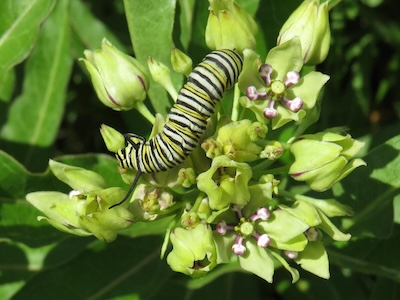
Green milkweeds in East Texas feed migrating monarchs.
March 24, 2026 - Every now and then East Texas offers up a moment that reminds us why we choose to live in this green, tree-strewn corner of the world. Sometimes it is a bobcat slipping across a pasture at dawn or a mayhaw blooming in a swampy slough. Sometimes it is the first tiger swallowtail zigzagging through a patch of blooming dewberries. And sometimes, if we are lucky, it is the chance to slow down long enough to notice the land itself and how it works, how it changes, and how it quietly holds the stories of millennia.
On Friday, March 27, the public will have that chance during a Mineola Nature Preserve Tour, an event I am honored to lead. We will gather at 9 a.m. at the pavilion, then set out on foot from 10 a.m. until noon to explore a natural East Texas landscape. Rain or shine, the preserve will be there waiting with its wetlands, prairies, woodlands, and winding river bottoms spread across 2,900 acres of living, breathing habitat.
If you have never visited the Mineola Nature Preserve, you have missed out. Perched along the Sabine River, the preserve is a patchwork quilt of East Texas ecosystems, each one shaped by water, soil, fire, wildlife, and the long arc of human land use. It is a place where you can stand in a sunlit prairie one minute and slip into a shady woodland the next. It is where eastern bluebirds nest in hollow trees, where beavers engineer their own watery worlds, and where native grasses sway like a slow-moving tide.
But the preserve is more than scenery. It is a living classroom, a refuge for wildlife, and a reminder that good land stewardship does not happen by accident. It takes intention, patience, and a willingness to work with nature rather than against it.
That is one of the themes we will explore on the tour. Land use changes, both past and present, shape the ecosystems we see today. East Texas has long been a working landscape. Timber, cattle, farming, oil, gas, and development have all left their marks. Some changes have been locally beneficial. Others have required thoughtful management to restore balance. The preserve is a shining example of what can happen when a community chooses to protect and nurture its natural heritage.
We will talk about native plants, of course, because you cannot understand a landscape without understanding its flora. Early spring is a wonderful time to walk the preserve. The redbuds and dogwoods may still be blooming along the edges of the woods. The first wildflowers will be waking up. The bluestems will be greening from the base, preparing for their fall show. And if we are lucky, we may spot the delicate blooms of coral honeysuckle or crossvine twining through the trees.
But plants do not exist in isolation. They are part of a larger web that includes insects, birds, mammals, fungi, and even the soil microbes beneath our feet. So we will talk about the bees and butterflies that depend on native flowers, the birds that rely on healthy woodlands and wetlands, and the quiet but essential work of decomposers that keep nutrients cycling through the system. Hopefully we’ll spot returning ruby-throated hummingbirds and monarch butterflies.
One of my favorite things about leading nature walks is watching people make connections. A connection between a plant and a pollinator. A connection between a habitat and a species. A connection between a management practice and the health of the land. When you understand how a place works, you appreciate it more deeply. And when you appreciate it, you are more likely to help protect it and encourage others to do likewise.
The Mineola Nature Preserve is a testament to that kind of community care. It exists because people believed the land was worth restoring. It thrives because people continue to invest in its stewardship. And it welcomes visitors because nature, at its heart, is generous.
Our walk will cover uneven terrain, so wear comfortable shoes and be prepared for a bit of adventure. This is not a manicured garden path. It is the real East Texas, with all its mud, and magic. That is part of the charm. Nature isn’t always neat, but it is always natural.
Space is limited, so early registration is encouraged. You can reserve your spot by calling the Wood County Extension Office at (903) 763 2924 or the Smith County Extension Office at (903) 590 2980. The Wood County Master Gardeners will also have their popular tip books available for purchase. These handy little guides are full of gardening wisdom, seasonal tasks, and even a few recipes.
The tour is presented by the Wood County Master Gardeners and the Smith County Earth Kind Environmental Educational Committee. Both groups are dedicated to promoting sustainable, science-based gardening and land stewardship. Their support helps make events like this possible, and their volunteers are some of the most passionate plant people you will ever meet.
Whether you are a gardener, a birder, a hiker, a photographer, or simply someone who enjoys being outdoors, this tour offers something for everyone. You do not need to know the name of a single plant to enjoy the preserve. A curious mind is the only requirement.
In a world that often feels rushed and noisy, spending a morning in the woods and wetlands is a gift. It reminds us that the natural world moves at its own steady pace. It reminds us that beauty does not always announce itself. Sometimes it waits quietly for us to notice. And it reminds us that we are part of something immensely larger than ourselves, something rooted in the earth and shaped by the seasons.