



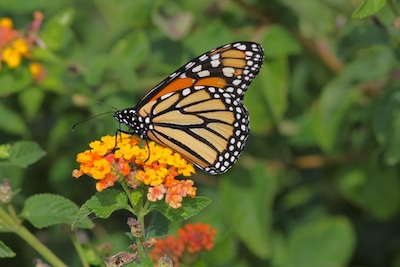
The monarch butterfly is the state insect of Texas
July 21, 2026 - Monarch butterflies are among the most recognizable and remarkable insects in North America. With their brilliant orange and black wings and an annual migration that spans thousands of miles between Canada, the United States, and Mexico, monarchs continue to captivate gardeners, naturalists, and nature lovers alike. Unfortunately, their populations have declined dramatically over the last several decades, making habitat conservation more important than ever.
To help East Texans learn how they can make a difference, the Texas A&M AgriLife Extension Service Earth-Kind Education Committee, the Smith County Master Gardeners, and the City of Tyler Water Utilities will present a special Summer Garden Series program, “Monarch Waystations for Texas: Planting for Monarchs,” on Wednesday, July 22, 2026, from 2:00 to 4:00 p.m. at the Cotton Belt Building, 1517 W. Front Street, Suite 116, Tyler.
The program will be presented by Carol Clark, a Texas Master Naturalist, member of the Native Plant Society of Texas, and Conservation Specialist with Monarch Watch. Clark has extensive experience educating Texans about monarch conservation and the plants needed to sustain them throughout their life cycle.
Participants will learn how to establish and maintain monarch waystations—special habitats that provide the food, shelter, and breeding resources monarchs need. These landscapes include milkweed, which serves as the sole host plant for monarch caterpillars, as well as nectar-producing flowers that fuel adult butterflies during migration.
Texas plays a particularly important role in monarch conservation. Often called the “gateway” for monarch migration, our state serves as a critical corridor for butterflies traveling north in the spring and south in the fall. Every year monarchs depend on Texas landscapes for egg-laying sites, caterpillar food plants, and nectar sources that help sustain their extraordinary journey.
Creating a monarch-friendly landscape does not require a large property. Home gardens, school grounds, church landscapes, community gardens, and even apartment patios can provide valuable habitat. By planting native milkweeds and a diversity of flowering plants that bloom throughout the growing season, gardeners can help support monarchs and a host of other beneficial pollinators, including bees, butterflies, and hummingbirds.
The presentation will also discuss practical habitat-management practices, including reducing pesticide use, providing water sources, and selecting native plants adapted to Texas conditions. Attendees will leave with information they can immediately apply to their own landscapes to make them more attractive and beneficial to wildlife.
This educational program is part of the ongoing Earth-Kind Summer Garden Series, which offers science-based information on gardening, conservation, water-wise landscaping, and other environmentally beneficial practices for East Texas residents. Admission is free, but seating may be limited. Those interested are encouraged to reserve a spot in advance by registering online at https://form.jotform.com/261795708925068
By learning how to create monarch waystations, local residents can play a meaningful role in conserving one of nature’s greatest migrations while adding beauty and biodiversity to their own landscapes. After all, helping monarch butterflies, our state insect, may be one of the simplest—and most rewarding—conservation efforts a gardener can undertake.
For more information, contact the Texas A&M AgriLife Extension office in Smith County at 903-590-2980